
Education software development company for learning apps people keep using

InApps builds and takes over learning platforms, LMS products and education apps for edtech companies and training providers, from an engineering team in Vietnam.

  • A scoping call first
  • Then a written proposal with team and cost
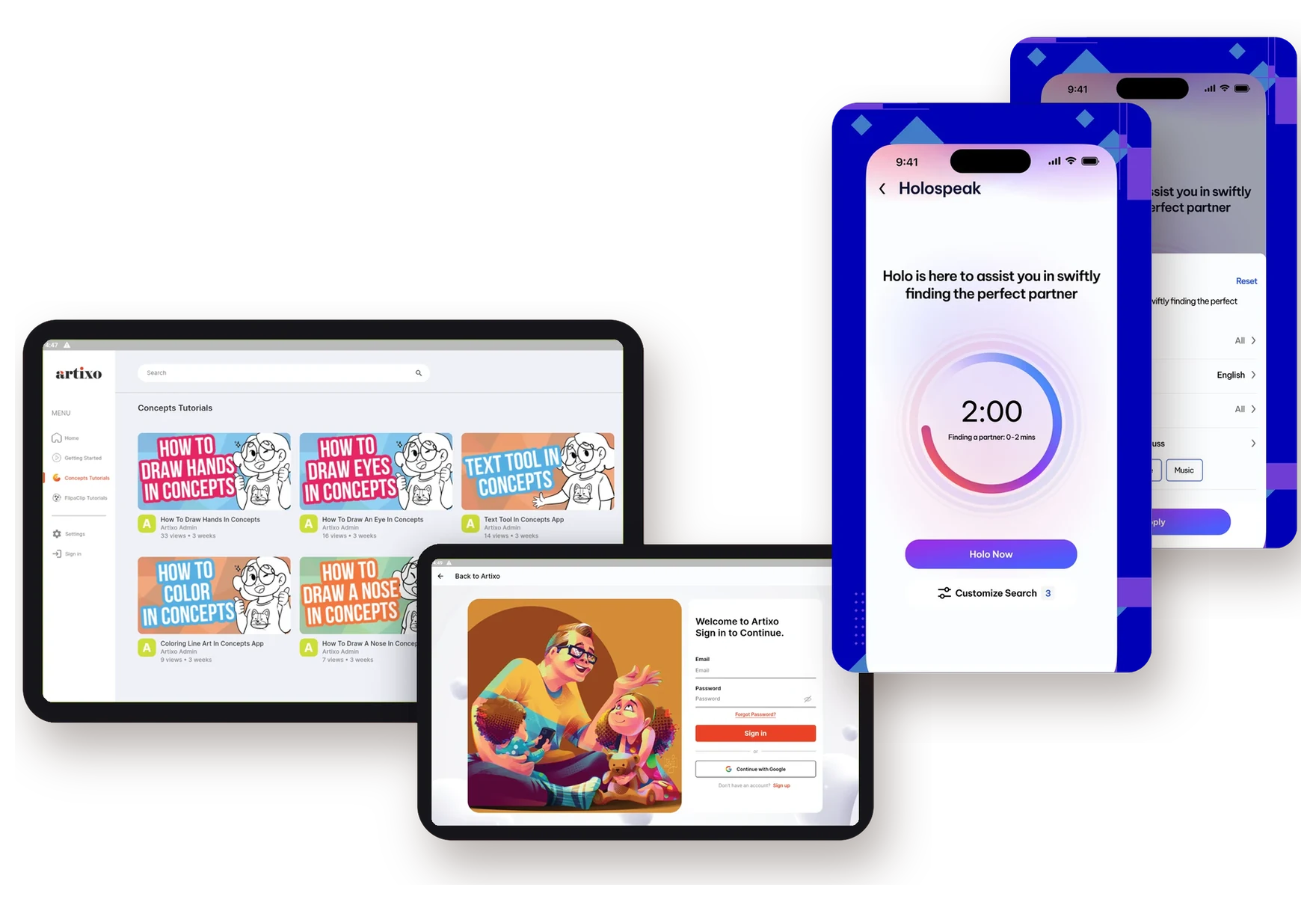
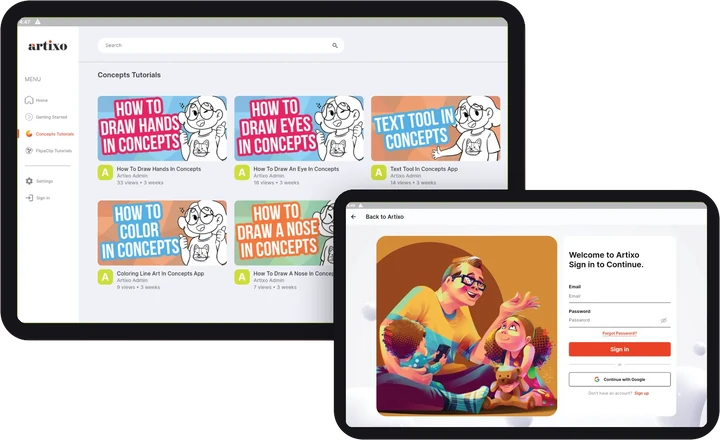
Two education apps InApps built: Artixo's drawing tutorial app on two Android tablets, with Holo Speak's language practice app on two phones

Education clients and recognition

Education teams that build with InApps

Why education is different

Why education software is harder to ship than it looks

A learning product has more users than it seems. A learner, a teacher, a parent and a school administrator each need a different view of the same data, and the school's procurement team checks the product before any of them log in. Most edtech builds stall at one of four points.

  • Schools buy through their existing systems

    Teachers want a tool to open inside the learning management system they already run, with grades flowing back to the gradebook. The open standard for that is 1EdTech's Learning Tools Interoperability. Its current version, LTI 1.3, moved security to OAuth 2.0 and JSON Web Tokens, so an older integration may need rework before a district will approve it.

  • Student data comes with a contract

    US school districts sign data privacy agreements before a tool touches student records. The Student Data Privacy Consortium reports that its National Data Privacy Agreement is behind more than 222,000 signed agreements across 13,000+ districts. Each promise in that agreement (deletion on request, no resale, breach notice) has to exist as working code, not only as a clause.

  • Children's privacy rules got stricter in 2026

    The FTC's amended Children's Online Privacy Protection Rule took effect on , with full compliance due by . Operators of services directed at children under 13 now need a written children's personal information security program and must publish a data retention policy in their online notice.

  • Accessibility deadlines reach vendor apps

    The US Department of Justice requires public schools, community colleges and public universities to meet WCAG 2.1 Level AA for web content and mobile apps, including content they provide through a vendor. Under the ADA Title II web rule, as extended on , public entities serving 50,000 or more people must comply by , and smaller ones by . An app that fails WCAG 2.1 AA gives a public buyer a reason to pick someone else.

  • Building the team yourself is slow and expensive

    Here is the math for a 4-engineer team over 6 months at 160 hours a month, using the 2026 senior full-stack benchmark. In North America, $120-200 an hour comes to $460,800-768,000. In Vietnam, $30-50 an hour (USD) comes to $115,200-192,000. The gap pays for a lot of QA and accessibility testing. Timing matters too: if a release misses the weeks before term starts, teachers set up their courses without it.

What we build

Education software development services we deliver

InApps education software development covers discovery, learner and teacher UX, web and mobile builds, LMS integrations and takeover of existing edtech platforms. The work is done by an ISO/IEC 27001:2022 certified team in Ho Chi Minh City.

Discovery and product scoping

We map every user role (learner, teacher, parent, admin), list the student data you collect and why, and name each integration your buyers will ask for. You get a release plan that works back from your customers' term dates.

Learner and teacher UX

Teenagers quit an app that feels slow. Teachers skip one that adds clicks to a lesson. Our UI/UX design work designs for both audiences, with WCAG 2.1 AA as the design target from the first wireframe.

Custom education platforms and LMS development

We build custom software for learning: course platforms, LMS products for training companies, tutoring and booking systems, assessment and quiz engines, and parent or admin portals. Each one ships with role-based access, audit logs and the reports your customers need.

Education app development for iOS, Android and tablets

Our mobile app development team builds learning apps in React Native, Flutter or native code. We plan for shared family tablets, classroom Wi-Fi and video playback that has to stay smooth on mid-range Android devices.

Integrations: LMS, sign-in, payments and live video

Connections your buyers ask about before they sign:

  • LMS launch and grade passback built to LTI 1.3 and LTI Advantage
  • Single sign-on with Google and other identity providers
  • Course content import and export in the package formats your buyers use
  • Payments and subscriptions for schools, centers and individual learners
  • Real-time video for tutoring and speaking practice

Edtech platform takeover and modernization

Inherited a codebase that keeps breaking? We stabilize it first, then rebuild only what cannot carry real use. Most takeovers start with a code audit, so you see the problems in writing before you commit to a rebuild.

On every education build

  • AI features for learning products

    We add generative AI where it saves a teacher or learner real time: practice question generation, feedback drafts on written answers, and search across course content. Student data stays out of model training unless your contract allows it.

  • QA and accessibility testing

    Our QA testing covers functional, device and accessibility checks before each release.

  • Support after launch

    After launch, software maintenance and support keeps the product stable through peak periods like term start and exam weeks.

Tech stack

Education software tech stack and standards

We work in the stack your product already runs on, or pick one with you during discovery based on who maintains it after launch. Holo Speak, for example, runs on React Native, Node.js and PostgreSQL on AWS.

  • Mobile and tablet

    • React Native
    • Flutter
    • Swift
    • Kotlin

    Learner apps on phones, shared family tablets and classroom devices

  • Web front end

    • React
    • Next.js
    • TypeScript
    • Vue.js
    • Angular

    Course players, teacher dashboards, parent and admin portals

  • Backend

    • Node.js
    • Python
    • Go
    • .NET
    • Java
    • PHP and Laravel
    • Ruby on Rails

    Enrollment, lessons, grading, bookings and payments

  • Data

    • PostgreSQL
    • MongoDB
    • Redis
    • Kafka
    • GraphQL

    Student records, progress tracking and learning event streams

  • Cloud and DevOps

    • AWS
    • Azure
    • Google Cloud
    • Docker
    • Kubernetes
    • Terraform

    Hosting that scales up for term start and exam weeks

  • AI

    • LangChain
    • LlamaIndex
    • Pinecone
    • Weaviate

    Practice question generation, answer feedback and course search

  • Education standards

    • LTI 1.3
    • LTI Advantage
    • SCORM
    • xAPI
    • OneRoster

    LMS launch, grade passback, content packages and roster sync

Not on the list? Tell us what your platform uses. If it is a mainstream language or cloud, we can usually staff it. Send us a project brief

Compare your options

InApps vs in-house hiring vs a generalist agency

How InApps compares with an in-house team and a generalist agency on cost, security evidence, education track record, inherited code and scaling
CriterionIn-house teamGeneralist agencyInApps education team
Senior engineer cost$120-200/hr North America benchmarkVaries by region and vendor$30-50/hr Vietnam benchmark, quoted after scoping
Security evidenceYou build and audit itAsk for it per vendorISO/IEC 27001:2022 certified
Education product track recordDepends on each hireOften a first edtech projectHolo Speak and Artixo live on app stores
Inherited codebaseYour team learns itOften restarts from scratchStabilize first, rebuild what breaks
Scaling for term startFixed headcountTied to project scopeProject, dedicated team or added engineers

Want the full cost comparison? See in-house vs outsourced development team costs over 3 years, or check every role in our 2026 rate benchmark table.

How to work with us

Engagement models and what drives the cost

Pick the model that matches how much of the product you want to own day to day. You can switch models later without changing teams.

  1. Build it end to end

    Best for a new learning app or a first LMS release

    We scope, design, build, test and launch the product as a project with agreed milestones. This fits a new learning app or a first LMS release.

    Billing
    Fixed scope and milestones agreed in planning
    Project-based outsourcing
  2. Get a dedicated team

    Best for a live platform with a steady release plan

    A dedicated software development team works only on your product under your roadmap. This fits an edtech company with a live platform and a steady release plan.

    Billing
    Monthly, per engineer
    Dedicated software development team
  3. Add engineers to your team

    Best when your team is right but too small

    IT staff augmentation adds React Native, Node.js, QA or AI engineers to the team you already run. At the Vietnam benchmark, one senior full-stack engineer costs about $4,800-8,000 a month at 160 hours.

    Billing
    Monthly, per engineer
    IT staff augmentation

What moves the price

  1. The number of user roles and the permissions between them
  2. Integrations: LMS, student information systems, payments, sign-in
  3. Live video or offline content
  4. Children's privacy scope if your users are under 13
  5. Platforms: web, iOS, Android, tablets
  6. Content and user migration from an older system
Vietnam seniorUSD 30 to 50/h
North America seniorUSD 120 to 200/h

Senior full-stack benchmark from our 2026 rate table: one engineer in Vietnam costs about $4,800-8,000 a month at 160 hours. For worked examples by product size, see our MVP development cost guide. Rates and costs are 2026 benchmark ranges in USD; final pricing follows a scoping call.

Education case studies

Education apps we have built and run

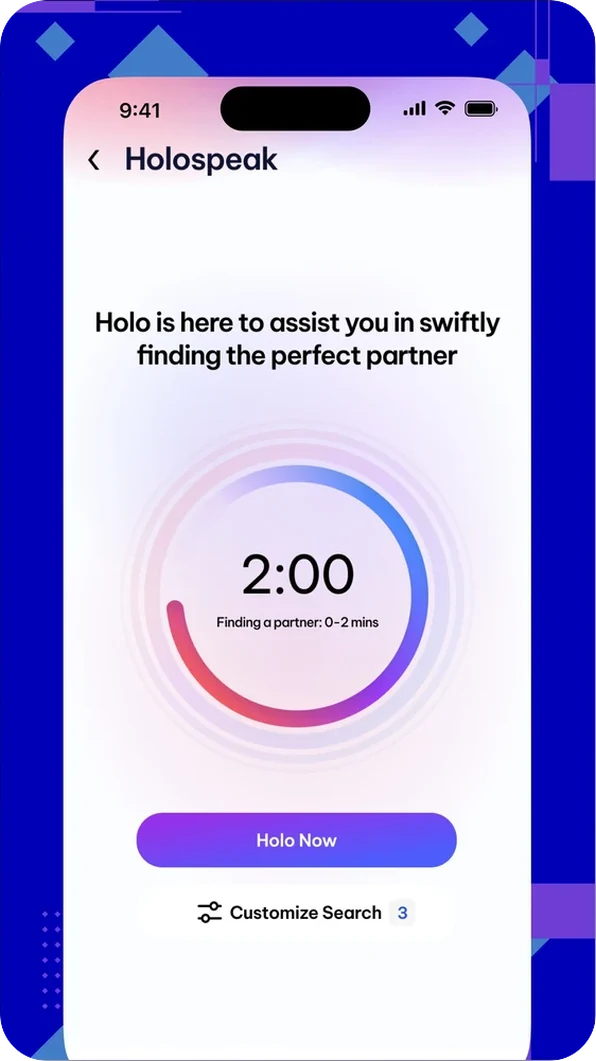
Holo Speak app: a two-minute timer while the app finds an English speaking partner

Featured case · Language learning, Ho Chi Minh City

Holo Speak: language-exchange app taken over and rebuilt

Holo Speak, from HOLLA Education Technology in Ho Chi Minh City, connects English learners with partners and teachers over live video. It came to us with a codebase built elsewhere that was not holding up under real use.

  • React Native app on iOS and Android
  • Dependable real-time video sessions
  • Partner matching and payments for English centers
Read the Holo Speak case study

How to start

Start with a project brief

Tell us who your learners are, what they need to do in the product and which systems it has to work with.

750+

projects delivered since 2016, for clients in 15+ countries.

A spec, a design or only an idea? Each is a fine place to start.

Send us a project brief
  1. You send

    Your brief

    Send your brief through our contact form, with any specs, designs or a link to your current app.

  2. We talk

    Scoping call

    We hold a scoping call with you to go through users, integrations, data and deadlines.

  3. You receive

    Written proposal

    You receive a written proposal with the team, the engagement model, a timeline and a cost range.

  4. We start

    First sprint

    We start with a first sprint or a first team, and you review working software at the end of each sprint.

Client reviews

What education clients say about working with InApps

Rated 4.9 out of 5, 39 verified reviews on Clutch (opens in a new tab)
EdTech client

“They are friendly and always willing to be flexible.”

Alvin Kuah Business Technology Director, Alexis Alliance Pte Ltd Mobile app development for an EdTech company ·
Read the full review on Clutch by Alvin Kuah (opens in a new tab)

FAQ

Common questions from edtech teams

Not sure where to start?

Tell us who your learners are and which systems the product has to work with.

Send us a project brief
What does an education software development company build?
An education software development company like InApps builds the software learning runs on: learning management systems, course and tutoring platforms, language and video learning apps, assessment tools and parent or admin portals. InApps also connects these products to the systems schools already use, such as an LMS through LTI 1.3, and takes over edtech apps that another team built.
How much does education software development cost?
Education software development cost depends on team size and duration more than on the subject. At the 2026 Vietnam benchmark of $30-50 an hour for a senior full-stack engineer, one engineer costs about $4,800-8,000 a month at 160 hours. User roles, integrations, live video, children's privacy scope and the number of platforms move the total, and InApps gives a range after a scoping call.
Can InApps integrate our product with a school's LMS?
InApps education software development teams connect learning tools to school systems through open standards. For LMS launch and grade passback, we build to 1EdTech's LTI 1.3 and LTI Advantage, which secure each launch with OAuth 2.0 and JSON Web Tokens. We also add single sign-on, such as Google sign-in, and content import and export in the formats your customers' systems accept.
How does InApps handle student data under FERPA and COPPA?
InApps builds the controls your privacy obligations call for, while you and your counsel decide which laws apply. Typical work includes role-based access to student records, audit logs, retention and deletion jobs, and data export for parent requests. Our ISO/IEC 27001:2022 certified security management covers how our team handles your data. For services directed at children under 13, the amended COPPA Rule applies from .
Can InApps take over an edtech app another team built?
InApps takes over existing edtech apps by stabilizing the codebase first, then rebuilding only the parts that cannot carry real use. For Holo Speak, a language-exchange app on iOS and Android, that meant making live video sessions dependable before adding partner matching and payments for English centers. A takeover usually starts with a code audit, so you see the problems in writing before committing to a rebuild.
How long does it take to build an education app?
Education app timelines depend on scope, integrations and the number of platforms you ship to. As a reference point, InApps designed and built Artixo, a video drawing-tutorial app for Android tablets, between April and June 2023, and it went live on Google Play in . Platforms with several user roles, LMS integrations and compliance work take longer, and we set the timeline with you after scoping.

Rates and costs on this page are 2026 benchmark ranges in USD; final pricing follows a scoping call. References to FERPA, COPPA, the ADA Title II web rule and student data privacy agreements are informational, not legal advice. Confirm your obligations with your own counsel.

Let’s build

Building a learning product? Send us the brief

Tell us who your learners are, what they need to do in the product and which systems it has to work with. We come back with the questions that decide scope, data handling and timeline.

4.9 / 5 from 39 verified reviews on Clutch
No sales deck No discovery invoice Written role map within five days

Send us a project brief

The more of the shape you give us, the more useful the first reply is. If the answer is that you should hire locally, or that another firm fits better, we will say that instead.

Google reCaptcha: Invalid site key.