Custom Software Development Services
Custom software development is the design, build and maintenance of an application written for one organisation's workflow, rather than bought as a package and configured to fit. InApps runs the whole thing: scoping, architecture, build, QA, release and the years after. Senior engineers in Ho Chi Minh City. Your repository, your architecture calls, your IP from the first commit.
- AI-assisted engineering
- First CVs within 72 hours of signing
- Your code and IP from the first commit
- Reply within 1 business day




Reviewed by founders, trusted by CTOs
Reviewers include Doug Guller, Founder and CEO of BidBid; James Fitzgerald, CTO of a software company; and Margo Flanagan, Director of Two Raw Sisters.
Trusted by engineering teams across 15+ countries - from startups to Fortune 500.


What custom software development services actually cover
Is a package nearly right, but not quite?
Software shaped around your process, not the reverse
Custom software development means the application is written for your workflow. Not configured, not extended with plugins. Written. That single difference is why the cost curve and the timeline look nothing like a SaaS subscription.
The work is not only the build. It is deciding what to build, choosing an architecture that still holds in year three, integrating the systems you already run, testing it, releasing it, and changing it once real users arrive. InApps covers all of that with one team. There is no handover to a maintenance vendor who was never in the room.
- Architecture decisions written down, and yours to overrule
- Code in your repository from day one, not delivered at the end
- The team that builds it is the team that maintains it
New product and platform builds
A system that does not exist yet, from scoping to production.
- Web applications and internal platforms
- Customer portals and marketplaces
- Mobile apps, native or cross-platform
- APIs and integration layers
- Data pipelines and reporting
- AI features on your own data
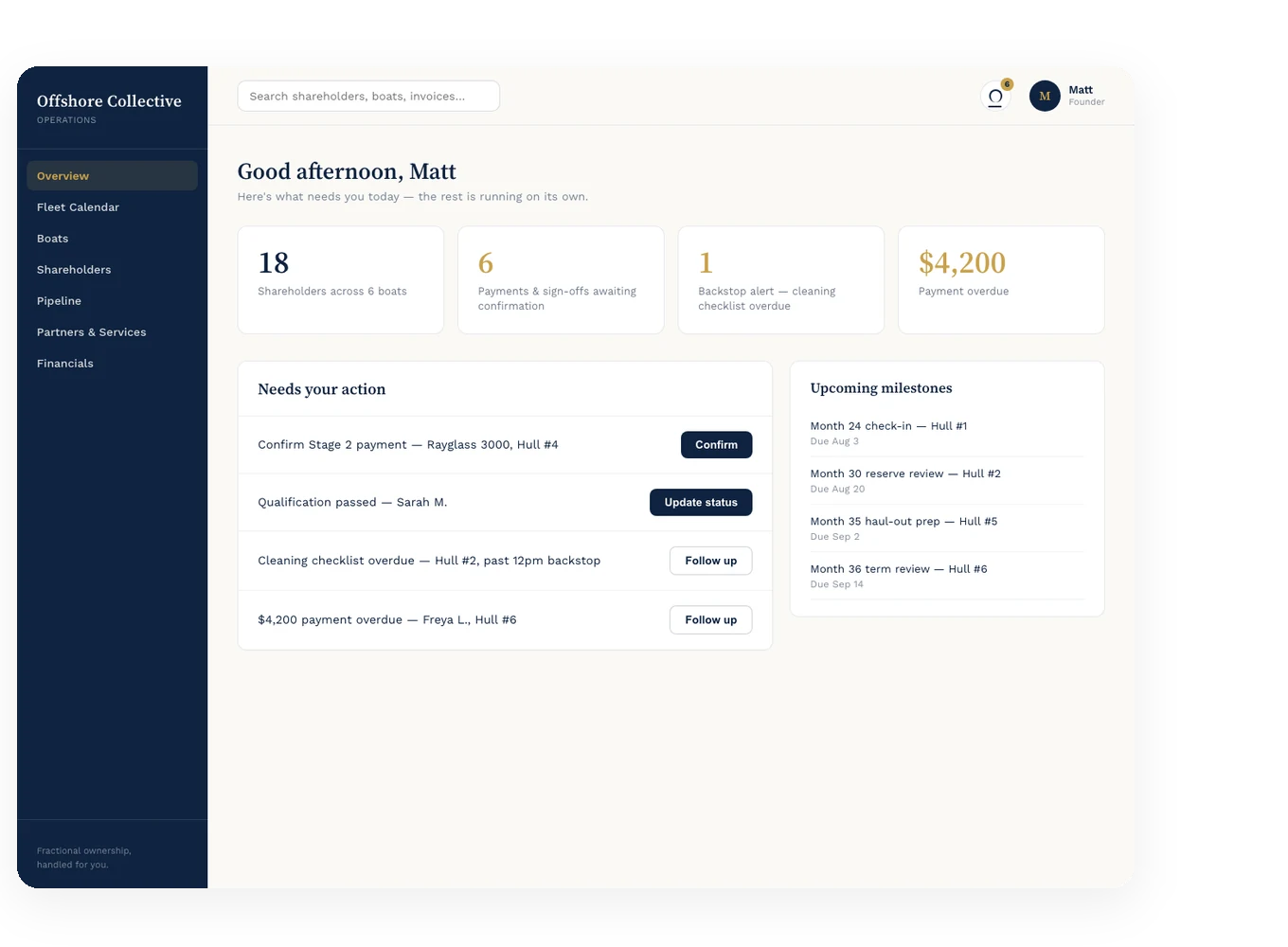
Customer and partner portals
Give customers and partners one place to find information, submit requests and follow progress. Each portal connects to the systems behind it, with permissions and workflows shaped around the people who use it.
- Customer portals and marketplaces
- Mobile apps, native or cross-platform
- Role-based permissions and workflows
- Interfaces from our UI/UX design team
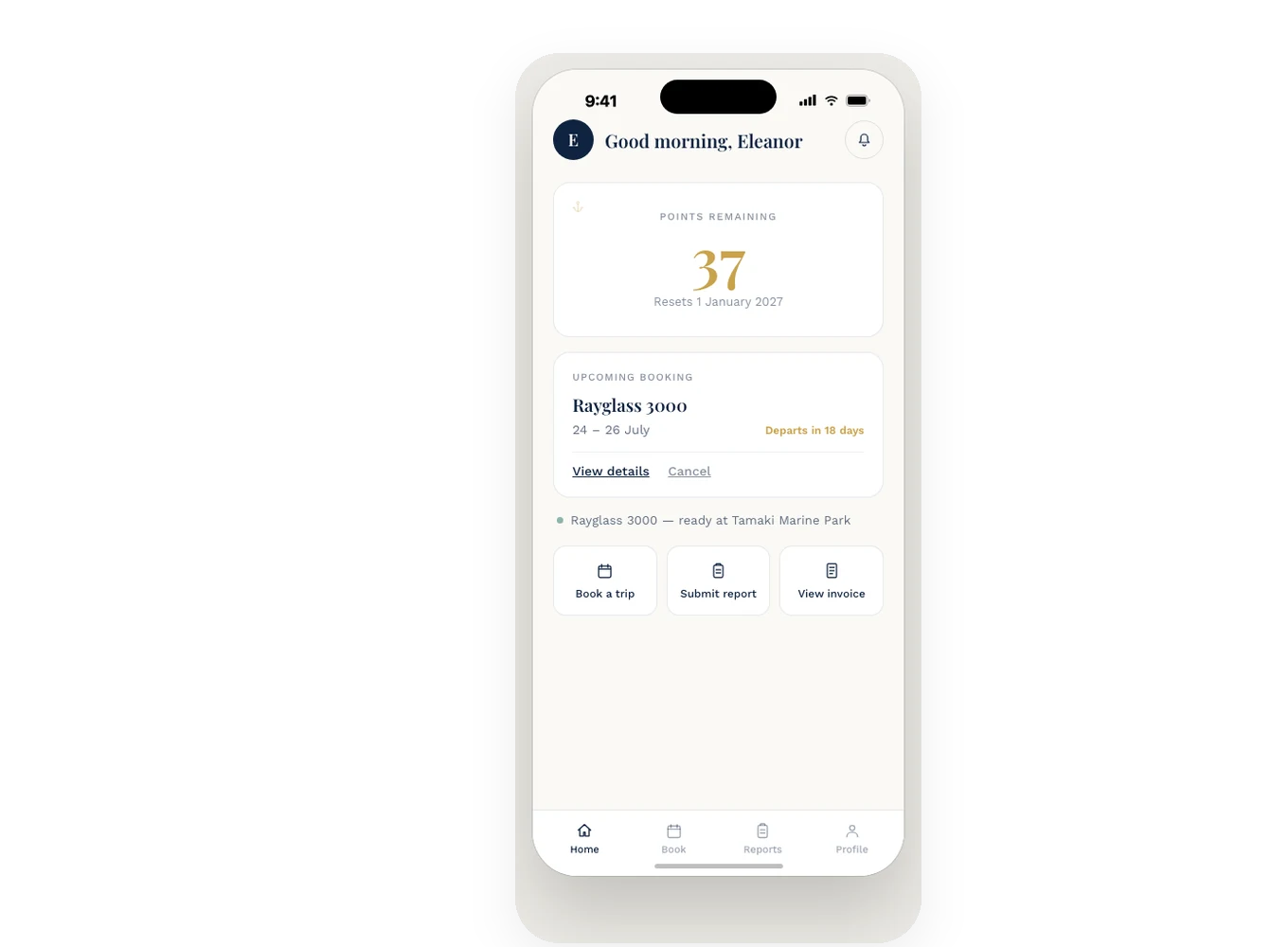
Legacy modernisation
A system that still earns money and can no longer be changed safely.
- Codebase and architecture audit first
- Incremental rewrite, never a big bang
- Database and API migration
- Cloud re-platforming
- Test coverage where there was none
- Documentation rebuilt as we go

Integration work
The half of the estimate most vendors get wrong.
- ERP, CRM and payment systems
- Partner and third-party APIs
- Legacy SOAP and file-drop interfaces
- Identity and single sign-on
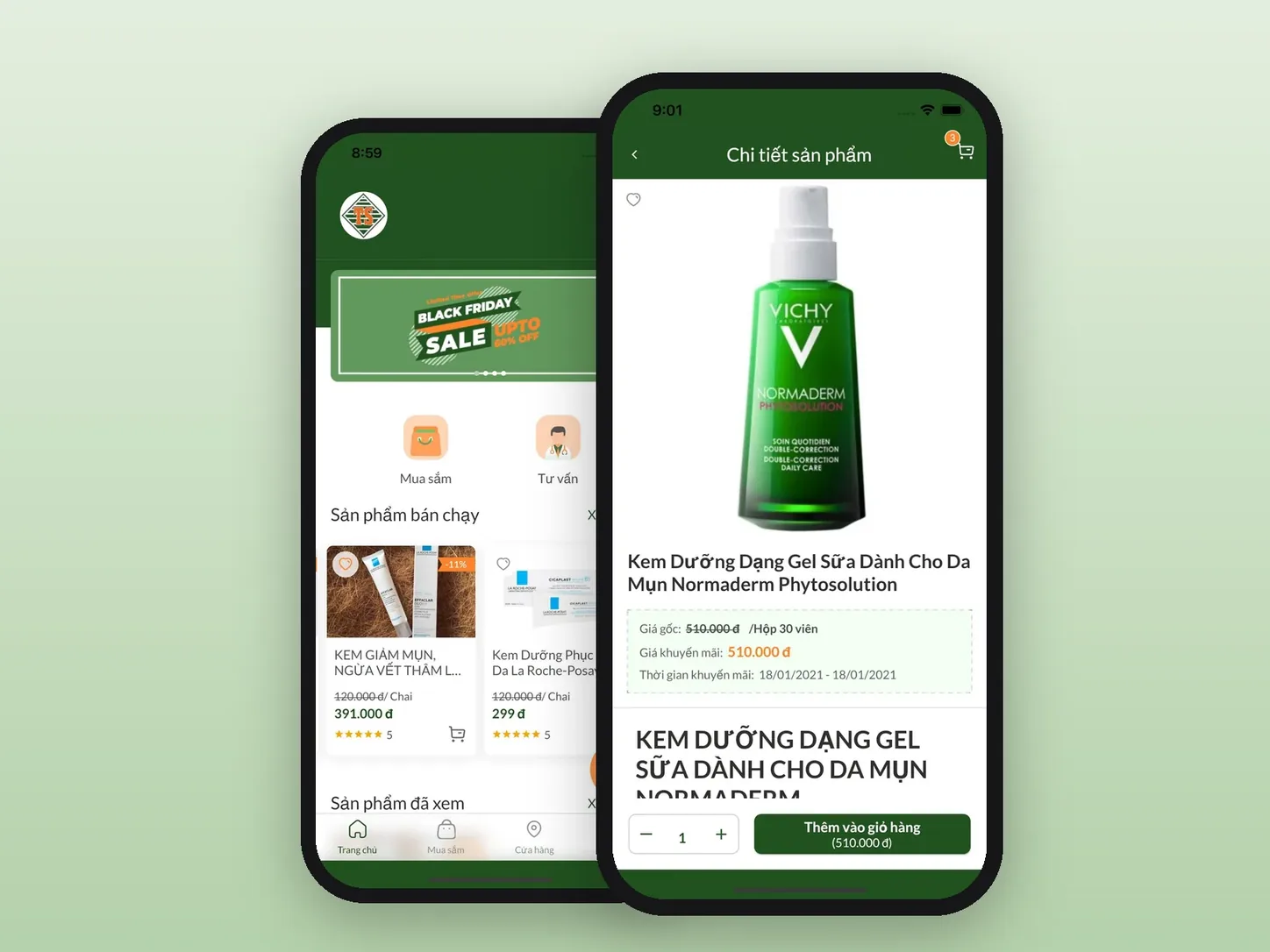
Run and evolve
After launch, which is where most of a system's life happens.
- SLA-backed support
- Monitoring and incident response
- Sprint-based feature work
- Security patching and upgrades
- Cost and performance tuning
- Documentation kept current

Custom software case studies and the clients behind them
Trung Son Pharmacy
A shopping app that sends every order straight into the ERP the chain already runs.
- iOS and Android from one codebase
- Every app order synced to the ERP
Project details: Trung Son Pharmacy
Pharmacy retailTrung Son Pharmacy’s customers browse, pay, track delivery and collect loyalty points from their phones. InApps built one Flutter app for iOS and Android on Magento, with a Laravel and Node.js backend between the app and the ERP.
- Flutter
- Magento
- Laravel
- Node.js
- Firebase
- Google Cloud
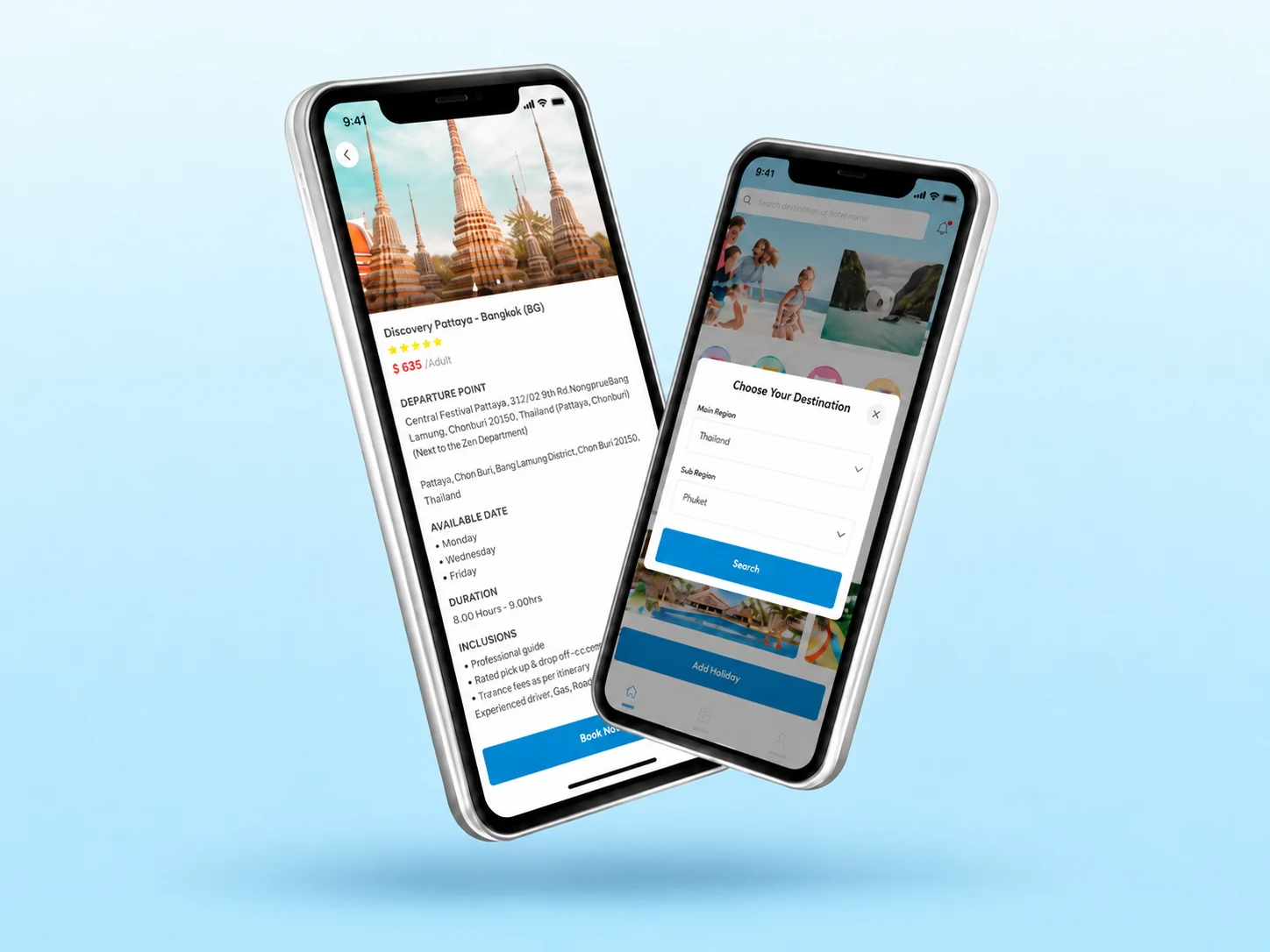
Pegas Vietnam Travel
One guest app on top of two core systems. Sales rose in the first month.
- 2 core systems, connected by API
- 5.0/5 verified review on Clutch
Project details: Pegas Vietnam Travel
Travel & tourismPegas Vietnam Travel, an international tour operator in Ho Chi Minh City, sells daily tours to guests on its holiday packages. InApps built its guest app in React Native on a PHP Laravel backend with Firebase, and connected it to Pegas’ two core systems through their APIs.
- React Native
- Laravel
- Firebase
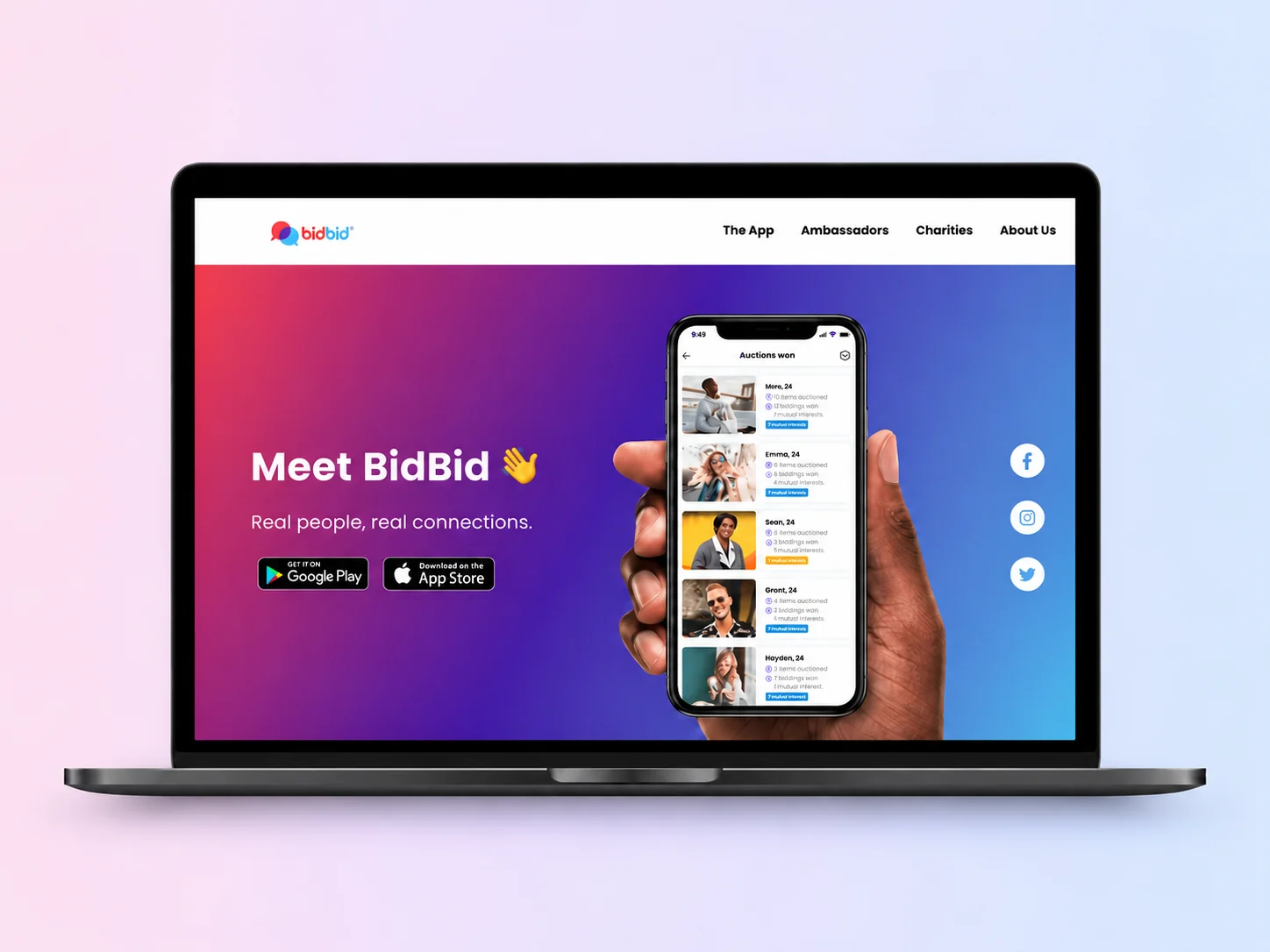
BidBid
From an idea to a dating app launched on the App Store and Google Play.
- On time, within estimates
- Live on 2 app stores
Project details: BidBid
Social & datingBidBid, a startup in Austin, Texas, is an auction-based app for career, social and dating connections. Its founder hired InApps to turn the idea into an MVP. A dedicated team designed and built the app in React Native and delivered it to specification, on time and within estimates, and BidBid launched on the App Store and Google Play.
- React Native
- Node.js
- PostgreSQL
- Google Cloud
Where we have shipped custom software before
750+ projects across fifteen countries. The regulatory context is usually the hard part, not the stack.
See the client list| Industry | What we build there | What makes it hard |
|---|---|---|
| Banking & fintech | Core integrations, payment flows, customer portals | Audit trails, data residency, regulator sign-off |
| Insurance | Policy administration, claims workflow, broker portals | Legacy policy systems that cannot go down |
| Healthcare | Patient portals, scheduling, clinical data exchange | Patient data handling, HL7 and FHIR interfaces |
| Retail & eCommerce | Storefronts, loyalty, order and stock synchronisation | Peak traffic, and stock that is wrong the moment it is stale |
| Logistics & supply chain | Fleet and route tools, warehouse and customs interfaces | Offline devices and partner APIs written in 2009 |
| Manufacturing | MES and ERP extensions, shop-floor and IoT capture | Machines that speak protocols, not JSON |
| Food & beverage | Ordering, POS integration, franchise reporting | Hundreds of sites, one release window |
| SaaS & startups | Multi-tenant platforms, billing, admin tooling | A roadmap that moves faster than the architecture |
Ask the people who stayed
Every quote below is from a verified review. None of them were written by us.
Across 39 verified reviews on Clutch, where reviewers are interviewed directly and we never see the draft.


Project management has been an 11/10. Always respond to my needs and questions in detail and deliveries have always been on time.”
 (opens in a new tab)


We were impressed by their willingness to overcome cultural challenges and deliver a product beyond our expectations.”
(opens in a new tab)

They don’t just build what you ask for. They think about the end result, and then go beyond it.”
(opens in a new tab)
Have a similar system challenge? Tell us what needs to work better and which systems are involved.
Book a consultationWorth the call, or worth an early no
Custom is the wrong answer to plenty of good problems. Here is where we say so.
- A configured SaaS product would genuinely do the job. We will tell you which one, and we would rather say it on the first call.
- You want it in six weeks and the scope is not negotiable. One of those two has to move, and we will not pretend otherwise.
- You are still validating the idea. Ask about MVP development instead, which is a smaller and cheaper question.
- You need engineers to slot into a team you already run and direct. That is staff augmentation, and it costs less.
A package covers most of your process, and the part it misses is the part that makes you money.
The business runs on spreadsheets that three people understand and nobody has documented.
You have a system that still works and can no longer be changed without breaking something.
The software is the product, and the roadmap is going to run for years rather than months.
Tick any sign that sounds like your business.
Book a consultationCustom build, off-the-shelf, or low-code
Custom is not automatically the right answer. This is the honest version of when it is.
| Criterion | Custom build | Off-the-shelf SaaS | Low-code platform |
|---|---|---|---|
| Fit to your workflow | Exact. It is written for it | Close on the common cases | Good until a rule the builder cannot express |
| Time to first release | Months | Days | Weeks |
| Cost shape | Higher up front, then flat | Low up front, per seat forever | Low up front, platform fee scales |
| Cost at 500 users | Unchanged. It is your software | Multiplies by seat | Multiplies by seat and by run |
| Changing it later | Anything is possible. You set the priority | The vendor roadmap decides | Inside the platform’s limits only |
| Integration depth | Whatever your systems expose | Whatever the vendor built | Connector library, then custom code anyway |
| Who owns it | You. Source, IP and deployment | The vendor | The platform holds it |
| How it ends | When nobody funds the next change | When your process outgrows the product | When you hit the ceiling and rebuild |
The decision function by function: custom software vs off-the-shelf: a decision framework.
Why choose InApps as your custom software development company?
You get a senior team in Vietnam that works on your system only, talks to you directly and stays with it. Here is what that rests on.

- 500+engineers
A dedicated team, not a shared bench
Your engineers work on your system only. The team is drawn from 500+ engineers across web, mobile, cloud and AI.
- 72hto first CVs
Start in weeks, not hiring cycles
First CVs arrive within 72 hours of signing the NDA and contract. Your team is onboarded in 4–6 weeks for the scope we confirm together.
- 92%engineer retention at 12 months
Knowledge of your system stays on the team
More than nine in ten InApps engineers are still with us after a year. Documentation, knowledge transfer and replacement terms are agreed for your engagement.
- UTC+7Ho Chi Minh City
Direct access, in hours that work for you
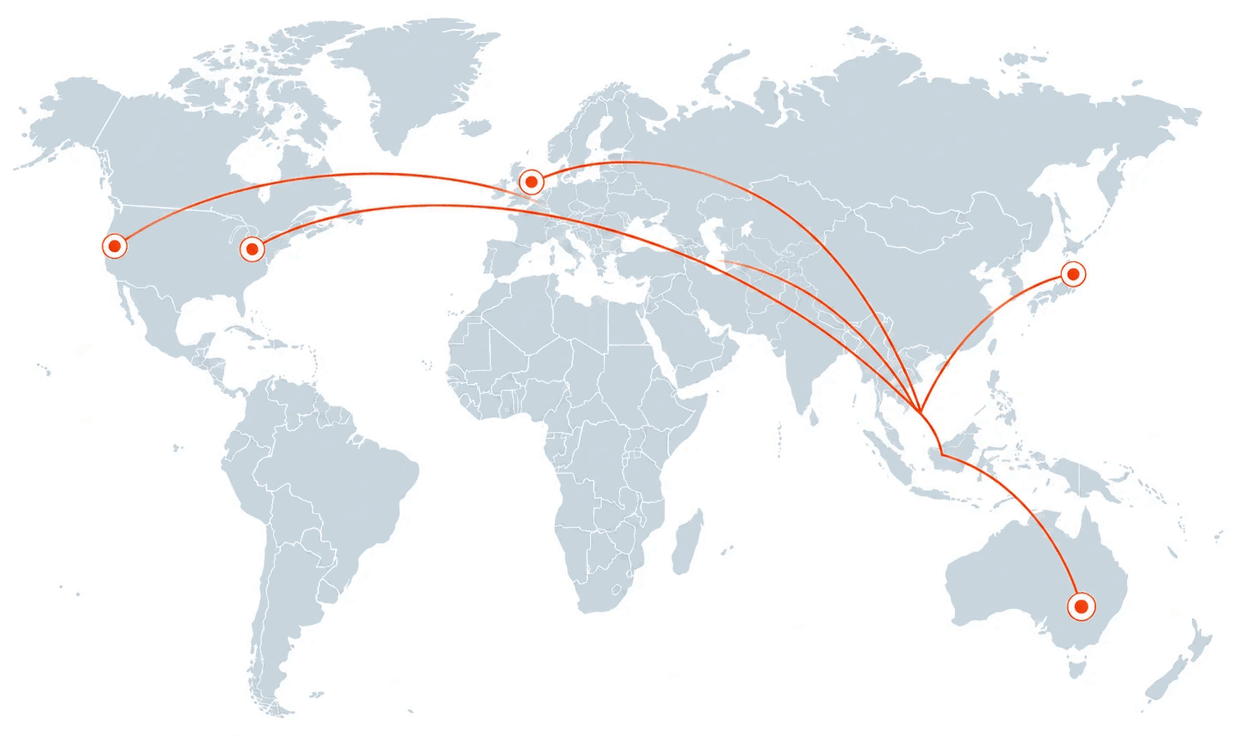
Talk to your engineers in your Slack and at your standups, with no middleman. Our day sits close to Singapore and Australian hours and overlaps Europe’s morning, with offices in London and Brisbane.
- 4assessment stages
Senior engineers you interview and approve
Every engineer passes the four stages below. 3% of applicants make it through, and then you interview them before they join.
Four stages before anyone touches your codebase
- 3%pass rate
- 4vetting stages
- 92%12-month retention
- 750+projects delivered
- Stage 1
Live coding & system design
- Real-world coding challenge
- System design interview
- Code quality and problem solving
- Stage 2
Communication & English
- Technical communication
- Client-facing scenario
- Written and spoken English
- Stage 3
Agile collaboration & ownership
- Agile mindset and teamwork
- Ownership and accountability
- Adaptability and growth mindset
- Stage 4
Final review & reference check
- Technical panel interview
- Reference and background check
- Culture and values alignment
A track record built over 10 years
Measured in projects delivered, client relationships, independent ratings, and industry recognition
 Top Staff Augmentation CompanyClutch, Vietnam 2025
 Sao Khuê AwardVINASA · 2025
 Rated 5.0/5GoodFirms · 18 reviews
 Top Dev EmployerTopDev · 2025
What custom software development costs in 2026
We do not publish a rate card. The honest number depends on scope, integration count and how long you need the team. What we can give you is the market. These are 2026 hourly ranges compiled from three published rate surveys, so you can sanity-check any quote you receive, including ours.
| Role (senior) | North America | Eastern Europe | Vietnam / SE Asia |
|---|---|---|---|
| $120–200 / hr | $45–75 / hr | $30–50 / hr | |
| $130–200 / hr | $50–85 / hr | $35–55 / hr | |
| $140–220 / hr | $60–95 / hr | $40–65 / hr | |
| $85–140 / hr | $35–60 / hr | $22–40 / hr |
Select a role in the table to estimate a team with it below.
Estimate a build team at benchmark rates
Pick a role and a headcount. The figures are the market bands in the table above, at 160 hours a month.
—
Market benchmark range, not an InApps quote. Figures are third-party 2026 survey data for the region, not our rates, and they cover the team only. A full project cost also carries scoping, design, QA, infrastructure and the integrations, which is why the honest number needs a conversation. Ask for a written estimate and you will get a real one for your actual scope.
Benchmark sources
- Aalpha: Offshore Software Development Rates by Country & Region 2026 (opens in a new tab)
- MarsDevs: Global Developer Rates 2026: Costs by Country, Role, Seniority (opens in a new tab)
- FullStack Labs: 2026 Software Development Price Guide & Hourly Rate Comparison (opens in a new tab)
Ranges are a conservative synthesis: where the three sources disagreed we took the wider span rather than the flattering end. Compiled August 2026.
Before you budget: the full cost breakdown and how to calculate custom software ROI.
Which engagement model fits your team?
The right model depends on who leads delivery: your team, a shared roadmap, or InApps from scope to release.
Need one or two engineers inside your team?
IT staff augmentation
Engineers join your team, follow your processes and report to your leads.
Need sustained capacity for a long roadmap?
Dedicated development team
A team that works only on your system and learns it over time. For a full tech department, see our Offshore Development Center.
Need a defined system delivered?
Project-based delivery
InApps owns delivery to the scope and acceptance criteria you agree, with a named owner on your side.
Compare the models in depth: staff augmentation vs dedicated team vs ODC.
From scoping call to production, and the years after
Stage 1: Scope and estimate
Week 1–2One workshop, then a written scope. We would rather lose the deal here than in month four.
- Workflow and integration mapping
- Non-functional requirements
- Architecture options with trade-offs
- A range, and what would move it
Stage 2: Architecture and design
Week 3–4Decisions get written down. Including the ones we argued about.
- System and data architecture
- User flows and interface design
- Security and access model
- Sprint plan and definition of done
Stage 3: Build
Sprint 1 onwardTwo-week sprints, a demo at the end of each. Nothing is ever 90% done.
- Working software every sprint
- Code review on every pull request
- Automated tests running in CI
- Your repository, from the first commit
Stage 4: Hardening
Before launchThe part vendors quietly skip when a date is slipping.
- End-to-end and regression testing
- Load and performance testing
- Penetration test, then the fixes
- Runbook, documentation and handover
Stage 5: Run and evolve
After launchThe system is live for years. It has to keep changing, and the same team keeps changing it.
- Support against an agreed response time
- Monitoring and alerting from day one
- Feature work in the same cadence
- Dependency and security upgrades
Each phase in detail, with realistic timelines: the custom software development process.
Keep delivery visible and decisions clear
Review working software
Demonstrations and test results drive feedback on completed work and the next priorities.
Make scope changes explicit
Review a change’s effect on effort, dependencies and release timing before approving it.
Agree how the teams communicate
Meeting overlap, channels, escalation contacts and who approves each decision.

First CVs in 72 hours. Your team onboarded in 4–6 weeks.
Both are counted from the NDA and contract, for the scope we confirm together. Bring the process you need to improve and the systems it depends on.
How to evaluate a custom software development company
Four questions separate vendors quickly. Ask us the same four. If any answer is vaguer than the ones below, that is the finding.
Ask for the answer in writing. A firm that will put its estimate assumptions, its exit terms and its IP clause in a document is a different firm from one that will only say them on a call.
Custom builds rarely fail on the code
Six failure modes we hear on almost every first call. Not one of them is a talent problem.
- A fixed-price quote meets its first real change request in week three. The rest of the project is a negotiation.
- Senior engineers pitch. Juniors build. You find out in sprint four, from the pull requests.
- Six months of work lands with no runbook. The handover is a Slack thread and a laptop that left with someone.
- The package covers most of the workflow. The rest runs on spreadsheets and goodwill.
- Integrations were one line on the estimate. They turn out to be half the build.
- The system ships. Nobody who wrote it is still available to change it.
Who actually writes the code?
Ask for the names and the seniority of the people who will be on your project, not the ones on the pitch call. Ask what happens if one of them leaves. If the answer is a resource pool, price the ramp-up in before you compare quotes.
What happens when the estimate is wrong?
Every estimate is wrong somewhere. The question is what the vendor does next: absorb it, raise a priced change request, or cut scope quietly and not mention it. Ask to see the change-request process before you sign, not after.
What do you own, and from when?
Ask whether IP transfers on signature or on final payment. Ask where the source lives during the build. Ask whether any component is retained or reused elsewhere. Get all three answers into the contract, because that is the one that matters if the relationship ends badly.
What does leaving look like?
Ask what you receive on the last day: source, infrastructure-as-code, credentials, documentation, and a build that runs from a clean checkout. A firm that has done a clean exit before can describe it in detail. One that has not will talk about partnership instead.
How InApps answers the third question: your code and IP from the first commit.
Whose code is it, and who can see it?
Two questions decide most security reviews. What stops your source leaving, and what happens to ownership if the engagement ends badly. Here are both answers, in the order legal asks them.
IP is yours from the first commit
Everything written for you is assigned to you under the engagement agreement. No milestone and no final payment gates the transfer, the work lives in your repository under your access control throughout, and nothing is retained or reused on another account.
ISO/IEC 27001:2022 certified
A certified information security management system audited against the 2022 revision, not a self-attestation. It covers the office, the devices and the network, and carries the access control, logging and incident response the standard requires.
NDA before repository access
A bi-directional NDA is signed before anyone gets an invite, and every engineer on your project clears background and reference checks. Confidentiality is carried in their employment contract, and access is provisioned by you and revoked by you.
GDPR for EU and UK work
Personal data is handled to GDPR requirements, with data processing terms agreed before onboarding. Access is limited to what the role actually needs, and residency and retention are agreed per engagement rather than assumed.
What you receive at handover
- Source code in your repository
- Build and deployment instructions
- System documentation
- Access transfer and a plan for who runs the system next
Frequently Asked Questions
Still deciding?
Send us the workflow and the systems it has to talk to. We will tell you honestly whether a custom build is the right shape for it, including when it is not.
Book a discovery call
Ready to add senior engineers to your roadmap?
Book a 30-minute call. We will map the roles, the timeline and a cost range - and tell you plainly if we are not the right fit.
Send us a project brief
The more of the shape you give us, the more useful the first reply is. If the answer is that you should hire locally, or that another firm fits better, we will say that instead.